
Generally that’s not where your first conversation with a stranger usually goes.
Ten minutes earlier, this accomplished bloke had been entertaining me with his story: in his early-sixties, his bride in her late-fifties, self-made, wanting to get better informed, wanting the kind of guardrails that would put him back in the driver’s seat.
The conversation went on. He talked passionately about their most significant milestones that have shaped them as a couple, as parents, as business owners. I couldn’t help but dig deeper into his story.
Truth be told, this is one of my favourite parts of what I do. I hear about the losses, the heartache, the struggles and the sacrifices. As I hear them, I relive mine. He also told me about his wins, about what he’s proudest of. Just gold.
Anyway, as the conversation went on, he started to talk about how his wife, Margaret, had been feeling lately, and the general mood of their discussions about the future.
“She’s more of a thinker, ultra-conservative, and I’m more of a talker and a doer and a risker,” he said. “She’s starting to get worried we’re going to run out”.
With his net worth nudging well into 8 figures, he didn’t feel it was likely. Yet here we were, talking.
And then out it popped: “I just want someone in my corner.”
I hadn’t gone looking for it. It surfaced the way the truest things in a conversation usually do — not as an answer to a question I’d asked, but as something that had clearly been sitting there for a while, waiting for enough quiet to surface. It’s the language of someone who suspects more information isn’t going to fix this feeling.
As a matter of fact, what they’re starting to experience is a lot more common than they probably think. Unpicking this …
For more than thirty years he’s been the guy who makes the call, takes the swing, backs his talents, and takes the calculated risks. That’s a genuine skill, developed the hard way, and it’s the skill that got them to eight figures.
Margaret’s the thinker. Careful, practical, the one who asks the valuable question at the right time, so leaps aren’t taken just for the thrill of it. The one who has worked out what happens on the other side of this decision.
Neither of those is a supporting role. They’re two complementary jobs, and I guess this partnership works because neither of them was equipped to do the other’s. Makes sense, it works this way in my marriage too.
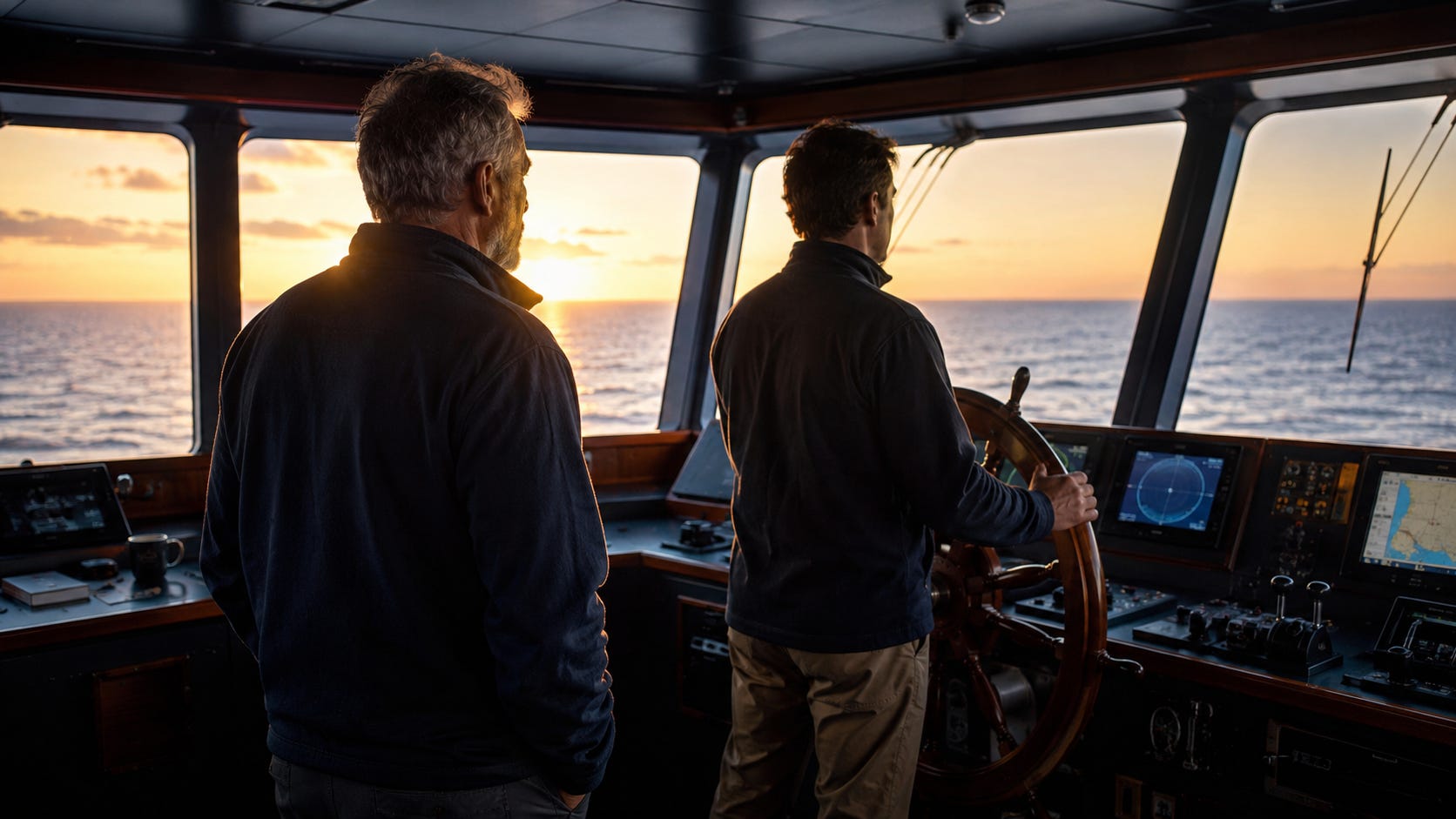
Which is why I reckon what’s happening now is so uncomfortable for him. He’s feeling his confidence wane not because he’s made some big mistake. He’s losing it because thirty-something years is a long time to be that stoic sailor, conquering sea beasts every day, keeping the ship on course and safe through calm seas and perfect storms alike.
No one stays that person forever — nor should they want to, really.
That taste for it doesn’t disappear completely but it does fade, making way for deeper needs that have been pushed to the side for a long time.
And that’s sort of the point, don’t you think?
You don’t spend nearly four decades fighting sea monsters so you can keep taking them on in your 80s and 90s. You defeat the monsters so that, eventually, you get to enjoy the spoils of victory. You have accumulated a war chest and now you have the time to enjoy it all.
In their case that means exploring places they haven’t seen yet and spoiling their newest grandson.
The trouble is, the job of watching the horizon doesn’t stop just because you no longer have the appetite for it. Someone needs to be manning the crow’s nest, spotting potential icebergs, not to mention doing the grubby work of running the ship. It’s been part of his identity for the best part of 40 years.
I should clarify – I didn’t get the feeling that Margaret’s a passenger on their ship. Their whole marriage has been built on each of them pulling their weight. In different ways – each of them did jobs the other wasn’t equipped to do. In that way their partnership was a success. He knows that. Which is exactly why setting down his part makes him feel a bit like he’s letting her down.
After all, once you’re out of the game, you lose your match-fitness quickly. And if something goes wrong, statistically she’s the one who’ll pay for it – and he won’t be able to fix it, and that really bothers him.
The situation I’m describing here isn’t rare. As a matter of fact it might be one of the most common things in the world. But it’s not usually the sort of thing either of them would be keen to talk about in a hurry. Maybe it feels a bit like a confession when neither of them did anything wrong.
But I will say this …
When you step back and take a look at this ship you’ve taken your entire working life to build, the vessel that’s going to carry you in safety and comfort for the whole of the rest of the journey, it goes without saying it’s no accident this ship stayed seaworthy. There was always someone awake and at the helm, through every watch. The hull was consistently checked for cracks or chips. The sails were meticulously kept in ship-shape condition.
It’s admirable. It’s also, eventually, exhausting.
When you’re at the wheel you don’t get to sleep. Someone still has to be awake, eyes peeled.
If any of this sounds uncomfortably familiar, you’re not alone.
Best regards
Daniel Brammall

Two ways I can help:
1) Roadmap Experience (Advisory)
Leave with clearer next steps and a practical path forward.
Book your call → danielbrammall.com/roadmap-experience
2) Retirement Resilience Forecaster (DIY)
See best case, worst case, and what’s more likely, not a straight-line guess.
Get the Forecaster ($27 AUD) → danielbrammall.com/retirement-resilience-forecaster
The WealthSpan Letter is general financial information, not personal financial advice. Consider whether any information is appropriate to your circumstances before acting on it.